The unprecedented changes on our streets, and public realm generally, in the face of Covid-19 have prompted many people to think about how our public realm could support Londoners in responding to this public health crisis. We have discussed possible interventions with our friends at RunFriendly and outline them below. We ask decision makers to urgently consider innovative and agile ways to adapt our public realm during this episode. If you would like to download this blog as a pdf please click here.
TfL has today published its first Strategic Walking Analysis which was to be launched at a joint event with London Living Streets on 16th March. The document and its associated datasets provides analyses of levels of walking , walkable trips and barriers to walking, mapping out at a granular level where the walking experience could be improved and where more people could walk.
London under lockdown has become a very different place from the one we were familiar with. The need for restricted movement and social distancing has already resulted in the postponement of a huge number of events including the launch of Transport for London’s Strategic Walking Analysis that we were due to host on 16th March.
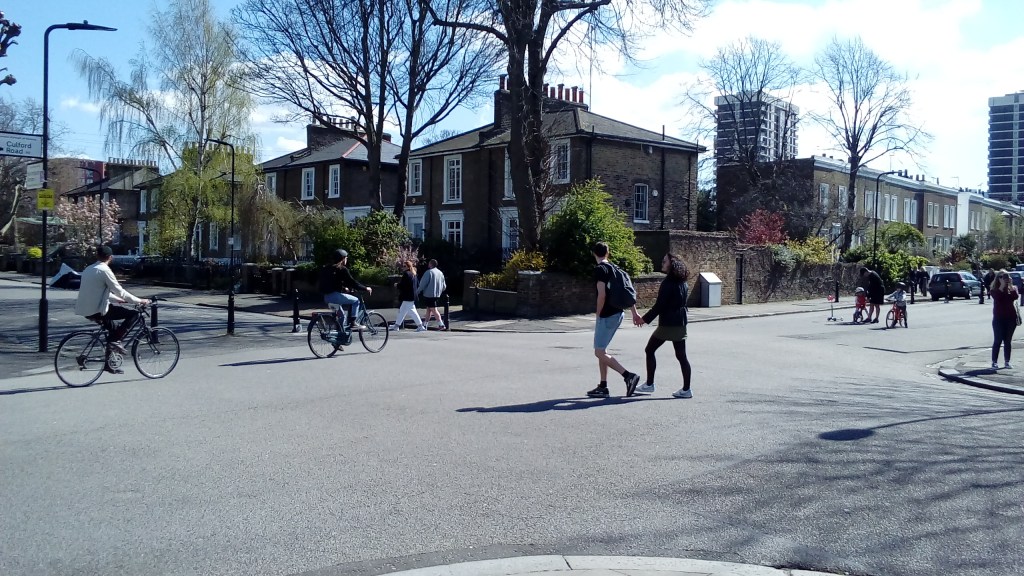
While we are all struck by the damage that the virus is causing, we have seen a dramatic fall in air pollution as a result of the greatly reduced volume of motor traffic since the lockdown started. However, the need to maintain a safe distance has highlighted just how little of our street space is given over to walking. Narrow pavements and frequent obstructions mean that when we make our essential journeys we are often having to move into the carriageway to avoid passing close to other people. Even with less motor traffic on the roads, this can feel very uncomfortable and unsafe. Detective Superintendent Andy Cox of the Metropolitan Police along with his team of officers is doing a fantastic job to communicate that they have no tolerance for drivers who speed or break the law. We would like to see all authorities re-enforce this with a message that drivers should look out for people on the road and share the space cheerfully and with good grace.
The national Living Streets website has comprehensive advice on when and how to walk with support for those who are wanting to walk to make those vital daily trips.
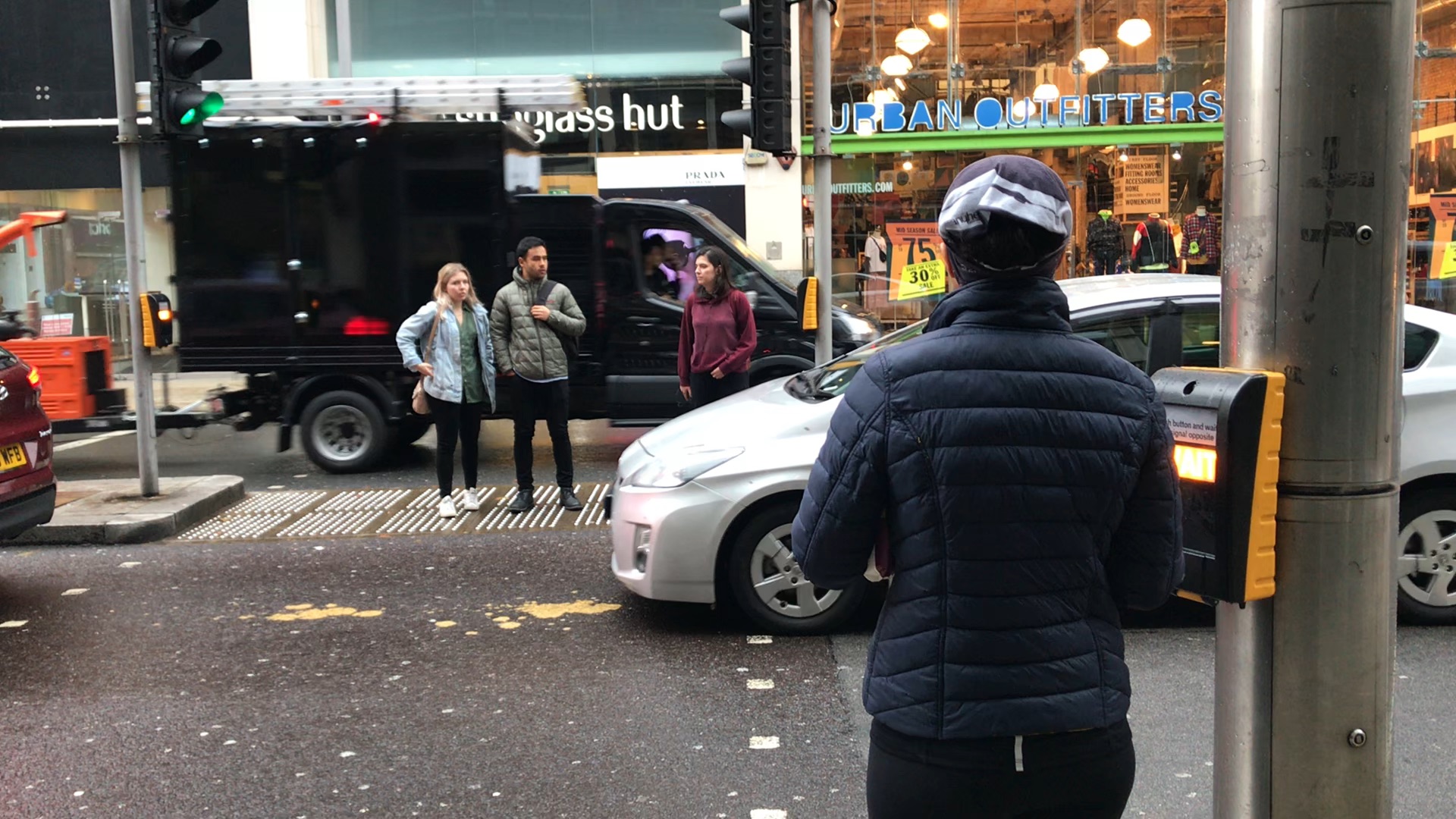
Hundreds of crossings in London, like this one on Edgware Road, still have no green man for people walking.
by Mike Grahn, Robert Molteno and Alastair Hanton
The goal of the London Living Streets Fairer Pedestrian Crossingsproject is to rebalance the way in which London’s network of signalised road crossings is operated to give the best possible service and experience for those travelling on foot.
TfL’s signals engineers are again inviting London Living Streets to send in lists of signalised pedestrian crossings that need wait times reduced. This is part of TfL’s Signal Timing Review Programme.
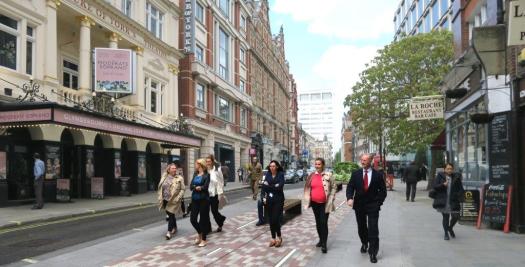
St Martin’s Lane reimagined as part of a Central London Walking Network
“The zeitgeist is changing. The politics of the street are changing. People are asking how we want to live.”
Nicholas Boys Smith, Create Streets
This was Boys Smith, one of the chairs at the Central London Walking Network conference on 28 November, responding to the energy, ideas and enthusiasm in the room. The event, organised with Urban Design Group, was a turning point in London Living Street’s campaign for a dense web of walking routes connecting major destinations in Central London.
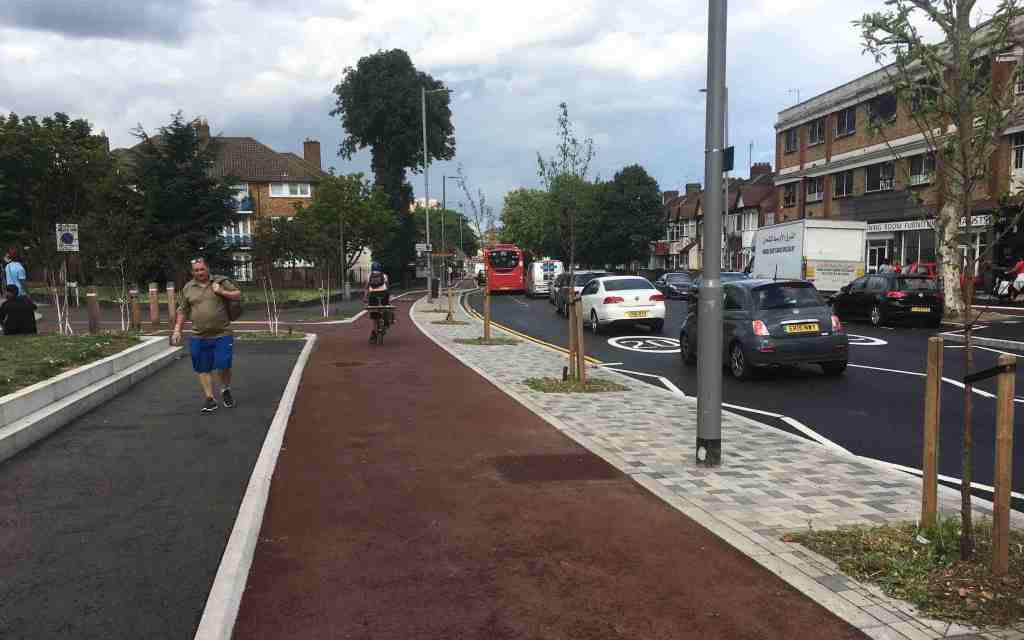
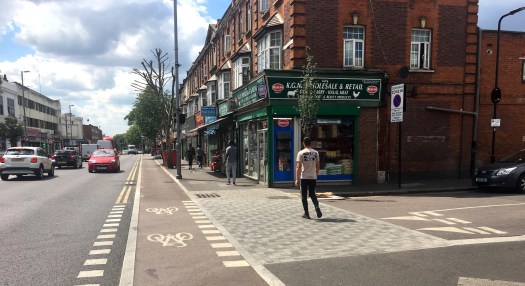
Improvements on Lea Bridge Road introduced alongside the introduction of Low Traffic Neighbourhoods in Waltham Forest. Image: Paul Gasson @AnalogPuss
by Robert Molteno and Jeremy Leach, London Living Streets
For a number of years, ‘smoothing traffic flow’ was at the heart of roads transport policy in London. This policy of facilitating journeys by motor vehicle infected everything – and negatively from the point of view of Londoners wanting to walk short trips, or cycle, or have clean air. 30mph and higher speed limits were largely unquestioned; pedestrian crossing timings were geared to keeping motor vehicles moving; signalised pedestrian crossings were removed; and roads capacity was increased, for example by adding more lanes, narrowing pavements or building wide turning radii at intersections.
Lea Bridge Road: Waltham Forest giving more space to low-carbon, healthy forms of transport
by Jeremy Leach, Paul Gasson, Robert Molteno and Emma Griffin
In response to public alarm over climate change, nearly two thirds of London councils had declared a climate emergency by October 2019. While it is relatively straightforward for a council to declare an emergency, it is far more challenging to commit to specific interventions that will deliver big cuts in carbon emissions.
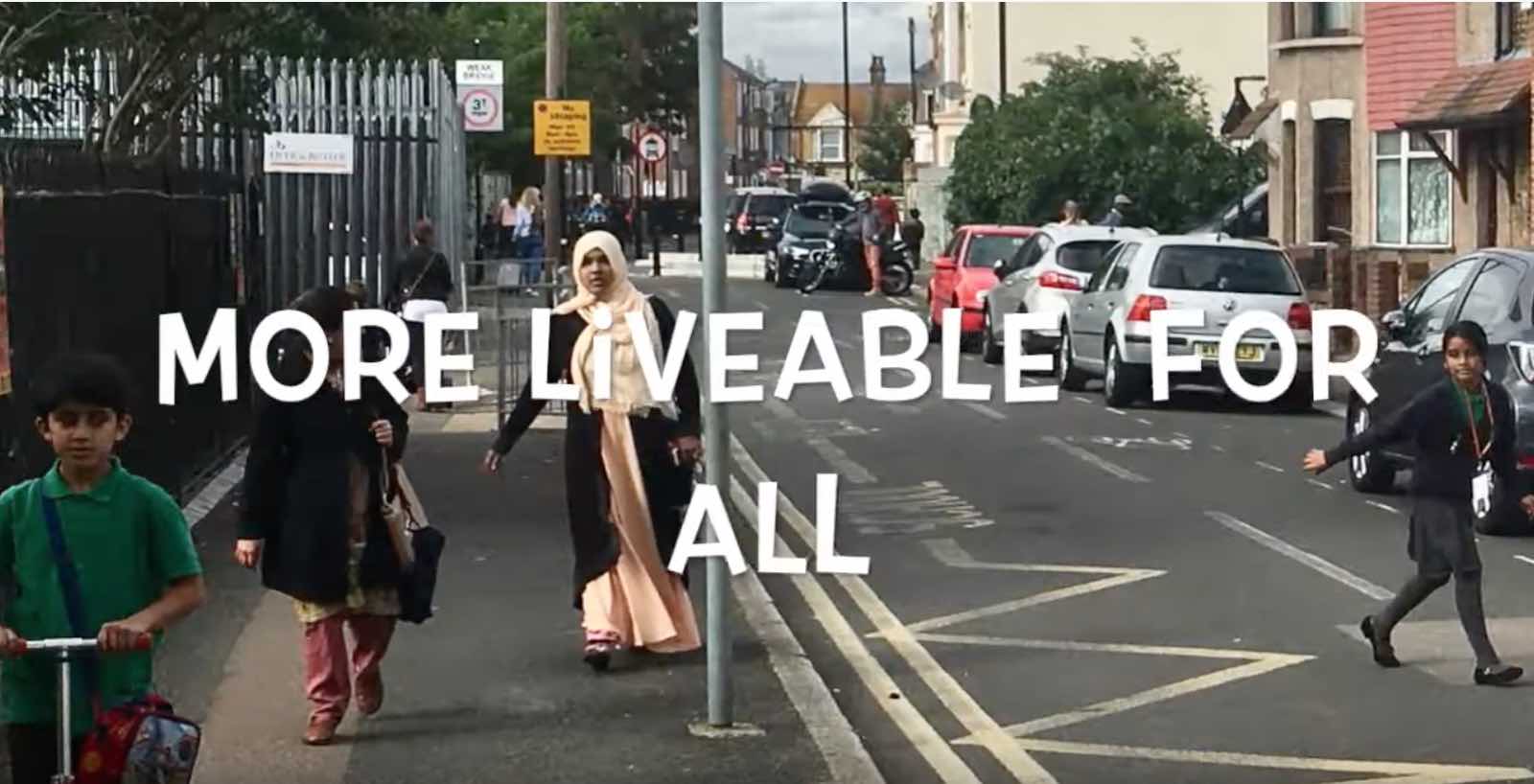
Are the streets where you live seeing more and more through traffic, especially in the morning rush hour? This is happening when non-local drivers take a short cut through a residential area to get from a major road on one side to the big route on the other. This is happening more and more as motorists used devices like Google Maps and Waze to tell them what is the quickest, least congested route to take. Continue reading “Watch our video to see the difference a low-traffic neighbourhood can make”
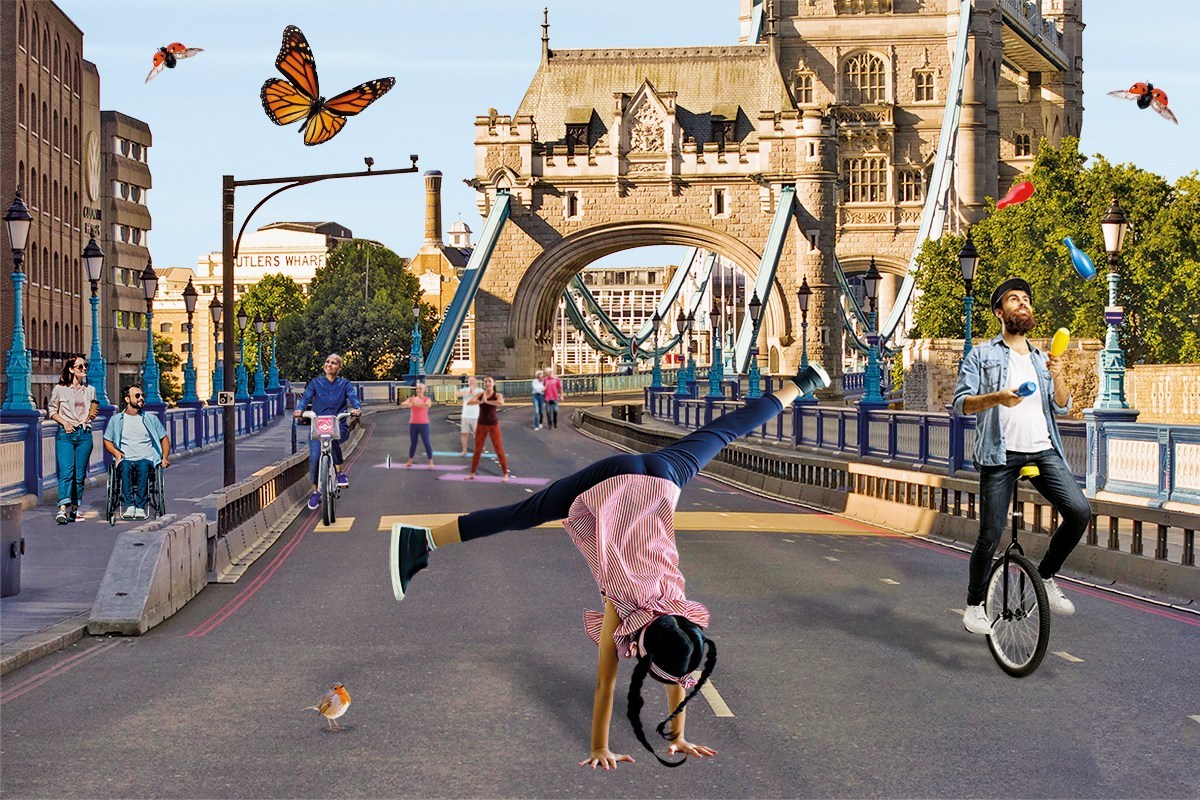
Streets across the capital will close on Sunday as part of World Car Free Day, including more than 20km of roads around Tower Bridge, London Bridge and the City of London as part of the Mayor’s Reimagine event.

 London Living Streets